
I have observed that incorporating a dedicated logic and reasoning course into our curriculum has been a remarkably effective strategy for enhancing my daughter’s problem-solving capabilities and cognitive agility. Building Thinking Skills (Level 1) serves as a robust framework for this, featuring ten comprehensive chapters that navigate through a variety of critical thinking concepts. The curriculum spans from basic shape recognition and classification to more intricate sequences and analogies. I find the dual-modality approach particularly sophisticated, as it segregates the concepts into both "figural" (visual-spatial) and "verbal" (linguistic-analytical) chapters. Furthermore, the inclusion of an answer key in the rear of the volume is a welcome administrative convenience, and the perforated pages are an absolute "mom-hack," allowing me to seamlessly transfer our weekly assignments into her binder.
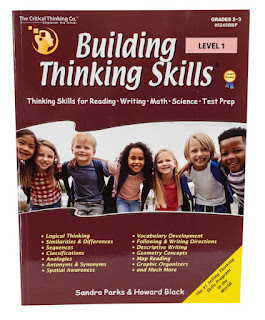
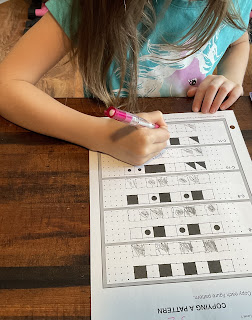

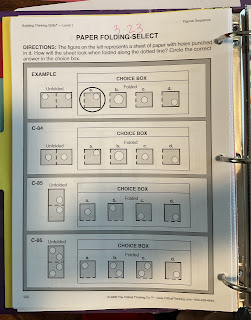
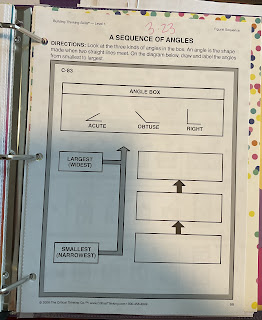

My primary critique of this resource is the monochromatic presentation; I believe a more vibrant color palette would significantly enhance the visual appeal and student engagement. While some of the introductory material regarding basic shapes has been a retrospective review for my daughter, the curriculum quickly ramps up the complexity. Even with familiar concepts, the problems are structured to provide a genuine intellectual challenge, forcing her to apply her knowledge in increasingly nuanced ways. It is less about "knowing" the shape and more about "analyzing" its relationship to the surrounding data.

Prospective users should note that the curriculum requires a baseline level of writing proficiency. While the introductory chapter permits oral responses, the subsequent verbal sections necessitate that the student physically record their answers. Since this volume is intended for the second and third grades, most students will be sufficiently prepared; however, for those who are still developing their fine motor skills, I have previously utilized a "trace-the-dashed-line" strategy to mitigate frustration. The verbal portion of the book is significantly more writing-intensive than the figural half, which primarily focuses on spatial reasoning through illustrations.

Because we only schedule our thinking skills class twice weekly, we typically tackle a substantial block of approximately five pages per session. To prevent cognitive fatigue or boredom—especially since most seven-year-olds harbor a natural disdain for extensive writing—I occasionally distribute a few pages throughout the day as a follow-up to other subjects. The book does incorporate drawing, matching, and coloring activities to break up the more rigorous analytical work. To combat the lack of color in the text, I frequently "gamify" the lessons by sketching the problems on our driveway with sidewalk chalk, inviting my daughter to physically jump onto the correct solution—a fantastic way to blend kinesthetic learning with critical thinking.

Although thinking skills is not a mandatory requirement within our state's educational framework, I consider the cultivation of a critical mind to be a non-negotiable priority. Since this specific workbook is designed to span both the second and third grades, we are currently evaluating our options for the future, but I am certainly leaning toward continuing with this series. It is a masterful way to ensure she isn't just memorizing facts, but learning how to process and synthesize information. I am curious to hear from the community: do you treat logic as a separate subject, or do you integrate it into your other classes? Let us know in the comments!

Thank you for sharing your experience! It's great to hear how much your daughter is benefiting from the class. I agree, fostering critical thinking skills is so important. Since my three daughters all love and enjoy books from https://www.fivesenseseducation.com.au/primary/test-preparation-general-ability/thinking-skills, I recommend exploring their range of educational books. They are particularly engaging and aligned with critical thinking skills. And you can choose books based on the year level, which makes it easy to find the right fit. Looking forward to hearing more about your daughter's learning journey!😊
ReplyDelete